From crispy little parcels to soft, steamy bites, dumplings have been bringing people together across the world for centuries. And while there are plenty of delicious dumpling varieties to discover, we’re shining a spotlight on one of our favourites: the gyoza. But what exactly makes a gyoza a gyoza? Join us as we unwrap the story behind these tasty Japanese dumplings, explore their journey from China to Japan, and discover how they fit into the wonderful world of dumplings.
what is a gyoza?
A gyoza is a Japanese dumpling made with a thin wheat wrapper, folded into a half-moon shape with a crimped ridge. The classic filling is ground pork and vegetables such as cabbage, chives and spring onion, though prawn, chicken and vegetable fusion gyoza are popular too. At itsu, we steam ours rather than fry them, the health[ier] way to enjoy a dumpling.
types of gyoza
There are many types of gyoza, differentiated by both their filling and the way in which they are cooked. Almost all gyoza are made with a wheat-based dough wrapper and are folded in a ‘half-moon’ or horn shape with a crimped ridge. Apart from these key foundations, it appears anything goes.
When it comes to fillings, the traditional Japanese gyoza contains ground pork and vegetables, usually a mixture of cabbage, chives and spring onions. This is by far the most popular filling, but you can find many alternatives, including prawn, chicken, vegetables, hoisin duck & beef. These fillings are often referred to in the name of the gyoza themselves, such as ebi gyoza (for shrimp), and yasai gyoza [for vegetables].
history of gyoza
The early history of the gyoza is shrouded in myth and legend. What we do know is that gyoza got their name from the Chinese dumplings, jiaozi. This means that to understand the early history of the gyoza you have to travel back to the invention of jioazi, which is when fact becomes theory.
The leading theory goes that jiaozi were invented around 2000 years ago by a doctor called Zhang Zhongjin, who created them as a cure for frostbitten ears. He made the jiaozi or jiao’er (meaning “tender ears”) as they were known back then, using lamb and herbs and gave them to his patients along with hot soup.
Fast forward a couple thousand years…jiaozi and gyoza are enjoyed all over the world. They hold a particular significance in China, where they represent reunion and prosperity and are eaten at midnight on New Year’s Eve.
how to cook gyoza
The most common way of cooking gyoza in Japan is by pan-frying them in a little bit of oil and then adding some water and placing a lid over the hot steaming gyoza. This method is called ‘yaki gyoza”.
Another popular method is steaming, in Japan, this is called mushi gyoza. This is the healthiest way to eat gyoza as the method requires no oil. You can also simmer them in hot water [sui gyoza] or they can even be deep-fried [age gyoza].
We always recommend checking the packaging for the best results.
Here’s a quick guide to cooking gyozas
|
cooking instructions for 5 gyoza [from frozen] steam Place colander/sieve above pan of boiling water. |
pan cook [authentic Japanese-style] Pre-heat pan with 1 tsp of oil on low/medium heat. |
gently simmer Add gyoza to a pan of softly boiling water. |
microwave Place gyoza in a microwaveable bowl & cover with cold water. |
recipes & serving suggestions
Gyoza are most often eaten on their own with a dipping sauce [see our recipe below], however, they can also be enjoyed in 100’s of Asian style dishes, including rice or noodles bowls, soups & broths, stir-fries and more!
Here are a few of our favourite gyoza dumpling recipes:
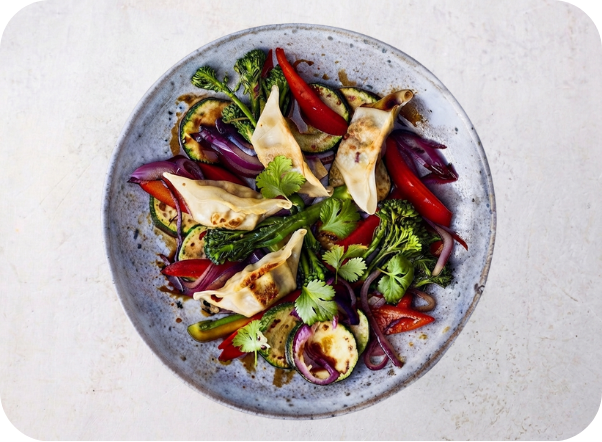
quick gyoza stir fry
This is the recipe Gok Wan cooked for us when we shot our gyoza TV ad! Vegan, simple & delicious. The crispy vegetable fusion gyoza really make the dish. Serves 2.

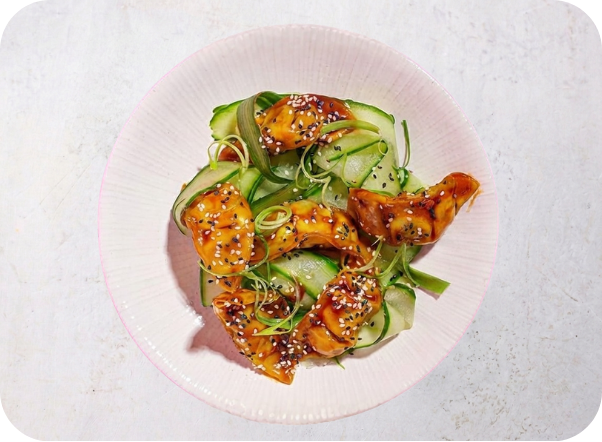
hoisin duck no-pancake
A deconstructed hoisin duck pancake made with our Hoisin duck gyoza, pickled cucumber ribbons and spring onion.
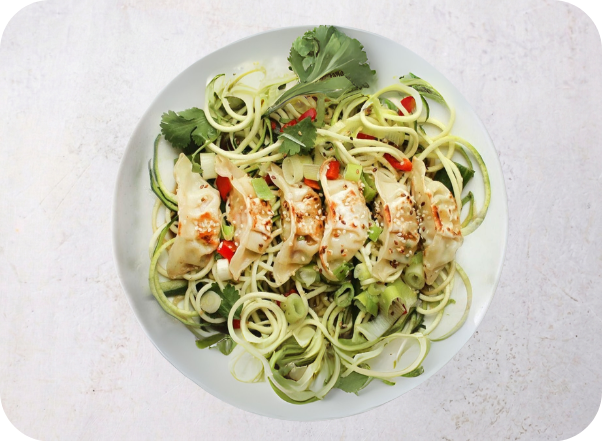
courgetti gyoza salad
Steaming gyoza, tangy Asian dressing and crunchy courgetti… Need we say more? Pan-fry the vegetable fusion gyoza for extra crunch.
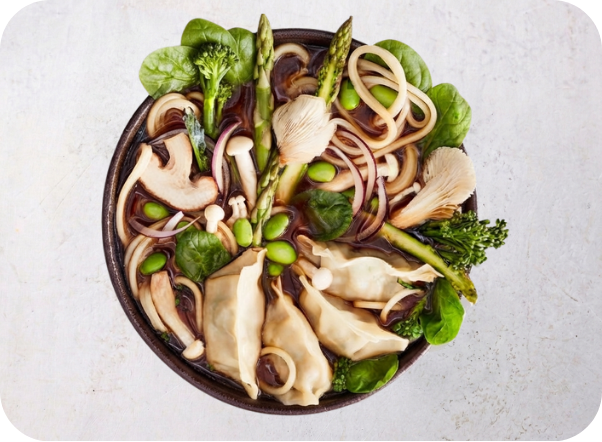
gyoza ramen bowl
A hearty & warming vegan ramen bowl made with itsu vegetable fusion gyoza and brilliant’broth. The gyoza soak up the broth, making them eve more delicious. If you’d like to look at some more gyoza recipes head to the yours & ours recipes page.
dumplings of the world
We wish we could go through every dumpling in the world, but that would take forever. So instead, we’ve listed some of the most famous iterations from around the globe below.
pierogi
Traditional Polish dumplings made by wrapping unleavened dough around savoury, or sometimes sweet, fillings. Now popular under many names across eastern Europe, the most popular type of pierogi is the Pierogi Ruskie, invented in Poland and filled with cottage cheese, potato and onion.
ravioli
Over in Italy this type of pasta is typically square, resembling little pillows of mouth-watering fillings. Dating back to the 14th Century, ricotta was just as popular a filling as it is now. Ravioli is not to be confused with tortellini or tortellini, which are folded pasta parcels, equally as delicious.
shumai
Shumai (also shaomai or siu mai) are most well-known within Cantonese cuisine, where they are a cornerstone of dim sum. Frequently filled with ground pork, shrimp, mushrooms, spring onions & ginger. There are wide regional varieties within China, as well as throughout the rest of Southeast Asia.
momos
From restaurants to street vendors, Nepalese momos are very popular indeed. These bite-sized dumplings are often served with a spicy dipping sauce. The making of momos is a joyful time when family & friends come together [even the children get involved]. They are best enjoyed freshly steamed & piping hot.
suet dumplings
A traditional British comfort food, these fluffy balls float over rich stews and are very easy to make. Unlike gyoza, these dumplings aren’t filled, but sometimes the dough itself can be flavoured with herbs & spices. A definite winter warmer.
manti
Turkey’s take on the dumpling is usually stuffed with minced meat, garnished with sumac & accompanied by garlic-yoghurt sauce. They tend to be smaller than other dumpling types mentioned, so they make a good starter or sharing platter for special occasions.
matlebekwane
A flour-based dumpling from Botswana. Unlike most of the above, matlebekwane are not filled with anything. Flour is kneaded with water & yeast, then left to rise. The dough is then separated and rolled into little balls and dropped into a boiling meat stew.
empanadas
Empanadas get their name from the Spanish verb empanar, meaning ‘to bread’. They are made by folding dough around a filling before baking or frying. The most popular fillings are ground beef or chicken.