health benefits of miso
Miso is a cornerstone of Japanese cooking, light, nourishing and naturally rich in protein. Our Miso Master, Yoshihiro, has been crafting miso with his family for over 85 years, using carefully sourced ingredients and traditional methods to create our favourite miso.

what is miso soup?
Miso in its purest form is simply a fermented soybean paste with rice [or barley] and salt. The fermentation process is activated through koji, a ‘starter’ which is a kind of fungus - Aspergillus oryzae to be specific [don’t worry, there isn’t a test at the end]. This grows on the steamed grains and is commonly used for making sake, soy sauce & mirin…an essential for Japanese fermentation foods. Although miso can be made without it, yeast is also an ingredient which is ‘indispensable for good smell’ according to our miso master, Yoshihiro.
The first reaction that takes place is enzymatic degradation which generates amino acids, sugars & many other substances. The next reaction which starts from bonding these amino acids & sugars is known as maillard reaction. The process can last a few weeks or even many years. The duration of fermenting results in different colours, tastes & varieties of miso. The most common & traditional appearance of miso is a thick paste.
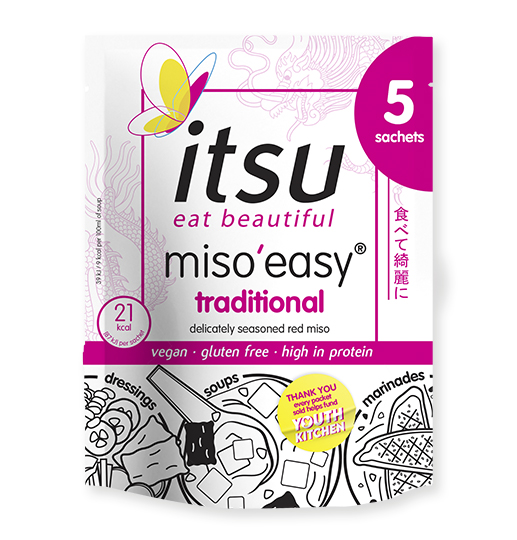
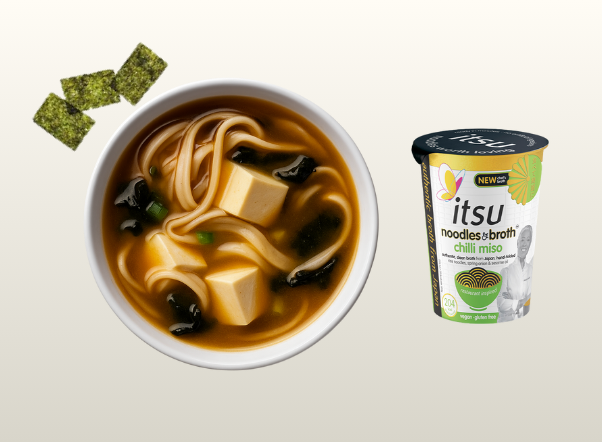
This paste, when boiling water is added, forms the basis of miso soup. Our miso’easy comes in two flavours, including a chilli miso which contains a blend of herbs & spices for a simple, warming miso soup.

how is miso made?
The first step in any miso-making is to create the koji. This is produced by introducing the Aspergillus oryzae fungus onto a grain, typically steamed white rice. Here it gets to work, producing enzymes which are essential to creating the final miso we know & love. The strain of Aspergillus oryzae & its enzymatic composition vary, which impacts the different characteristics of the final miso made.
Next, the koji is combined with the other ingredients [soybeans, salt & water] which are enzymatically digested, fermented & aged…a whole lot more delicious than it sounds.
Our itsu miso’easy is made in the stunning Nagano Valley, a short train ride from Tokyo in Japan. Here, our beloved miso master, Yoshihiro, has been hand-crafting miso with his family for over 85 years. He has sourced the best ingredients & environment [cool climate & pure soft water flowing from the Nippon Alps], combined with highly skilled people to produce the perfect miso. We couldn’t be prouder to bring it to you to enjoy!
varieties of miso
The different colours & strengths of miso are dependent on a number of factors. Though it is traditionally made from soybeans, there are wide varieties and differences. From the Koji species used and its ratio to soybeans, to the fermentation period, amount of salt and the type of grains used. The type of soybean & their cooking method [boiling or steaming] also play a role. For example, if the ratio of soybeans: koji is in favour of soybeans, this tends to result in a stronger/more robust or umami taste. Whereas if the ratio is in favour of the koji, this leads to a milder or sweeter taste. Stirring during the early stages of fermentation accelerates the colouring reaction as it provides oxygen.

why do we love miso?
“Miso is a fermented soybean paste traditionally used in Japanese cooking. Fermentation involves microorganisms such as bacteria, which contribute to its distinctive composition and its deep, rich, savoury umami flavour. Miso contains plant compounds such as isoflavones, which are a type of polyphenol and an area of ongoing nutrition research.
Although heating miso means live bacteria are no longer present, it can still contribute minerals, vitamins, and byproducts of fermentation known as postbiotics. These are compounds formed during the fermentation process that remain in the food even after it’s heated and form part of the overall nutritional profile. Miso can also provide small amounts of B-vitamins and vitamin K.”
health benefits of miso soup
Miso plays an essential role in Japanese cuisine. Traditional miso soup is widely enjoyed for its nourishing qualities and is often described as a superfood.
stimulates the digestive system for good gut health
The gut is home to trillions of bacteria. Whilst some of these are hugely beneficial, others can be particularly harmful bacteria. It is important to have the right type of bacteria in your gut to help maintain healthy gut flora, meaning good gut health.
strengthens the immune system
As the immune system is recognised as a vital part of the body, there is high demand for food considered to be immune-boosting. Studies have shown that the vitamins often found in miso are believed to help towards improving the body’s immunity functions. In fact, some research has gone on to suggest that these vitamins found in some varieties of miso also maintain the nervous system. This can range from supporting neurological and psychological functions to helping towards the reduction of tiredness and fatigue.

nutritional value of miso soup
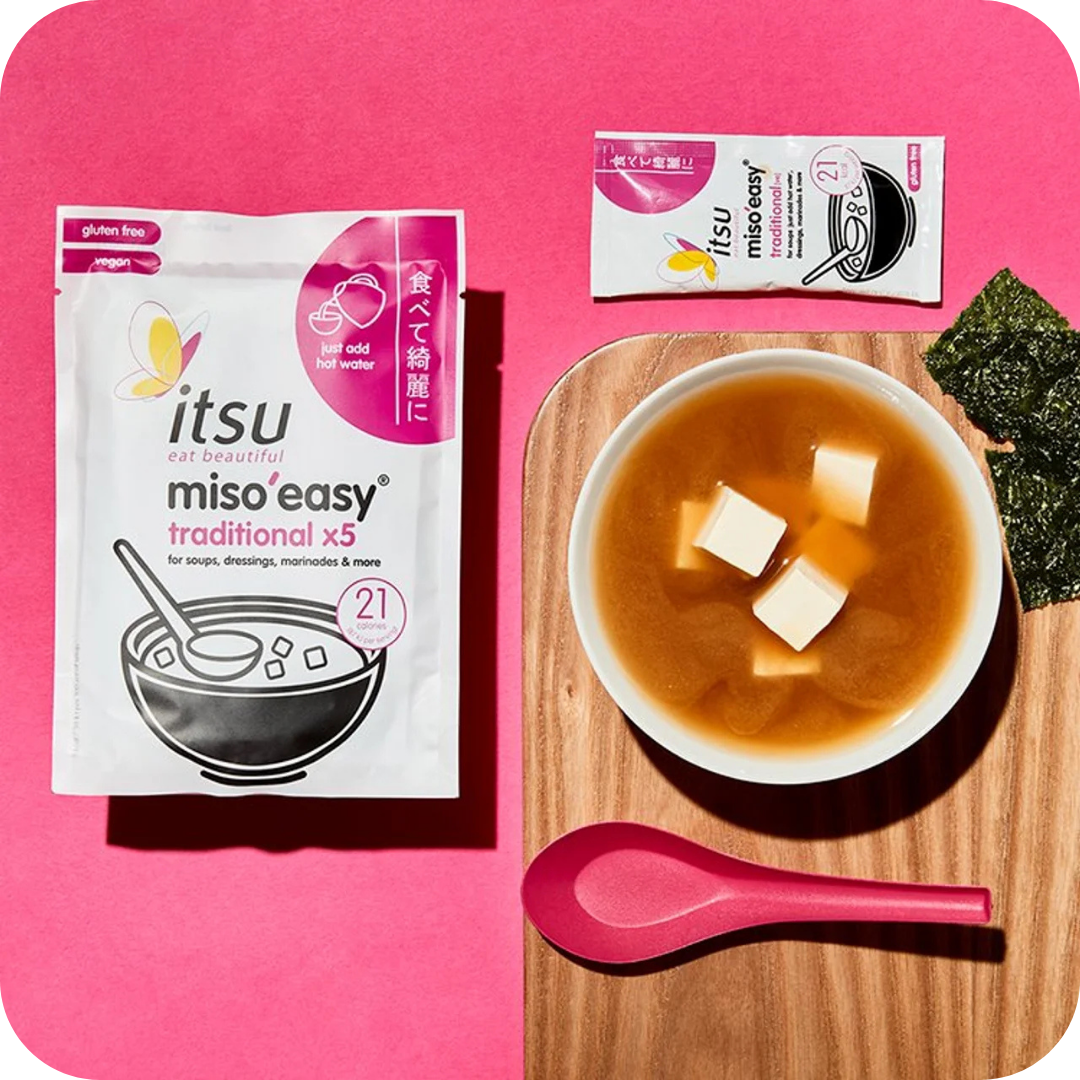
Aside from its beneficial bacteria and enzymes, a major benefit of miso is its function in maintaining a nutritional balance. Enjoying a miso soup can contribute towards a healthy, balanced diet. itsu’s traditional miso’easy when enjoyed on its own, is just 21kcal per serving.
itsu’s miso’easy is high in protein [this is from the soybeans] and due to the process of miso fermentation and fermented foods in general, the nutrients have been broken down into their simplest form…making them easier for our bodies to digest.